Top 5 Travel Policy Automation Software
A comparative review of the leading software solutions designed to automate and streamline travel policy management.
A comparative review of the leading software solutions designed to automate and streamline travel policy management.
Top 5 Travel Policy Automation Software
Hey there! If you're running a business, big or small, you know how much of a headache managing travel can be. From booking flights and hotels to tracking expenses and making sure everyone sticks to the rules, it's a lot. That's where travel policy automation software comes in. These tools are designed to take the manual grunt work out of travel management, making things smoother, more compliant, and often, much cheaper. We're going to dive deep into the top 5 solutions out there, comparing their features, use cases, and even giving you a ballpark idea of their pricing. So, let's get started and find the perfect fit for your company!
Why Automate Your Travel Policy Management? Benefits and Efficiency
Before we jump into the specific tools, let's quickly chat about why automating your travel policy is such a game-changer. Think about it: without automation, you're probably dealing with a mountain of paperwork, endless email approvals, and constant questions about what's allowed and what's not. This isn't just inefficient; it's a breeding ground for errors and non-compliance. Automation brings a ton of benefits:
- Cost Savings: By enforcing policies automatically, you reduce out-of-policy spending, leverage preferred vendor discounts, and get better visibility into your travel budget.
- Increased Compliance: The software guides employees to book within policy, reducing the need for manual checks and approvals.
- Improved Employee Experience: A streamlined booking and expense process means less frustration for your travelers. They know the rules upfront and can book quickly.
- Enhanced Data and Reporting: Get real-time insights into your travel spending, identify trends, and make data-driven decisions to optimize your policy.
- Time Savings: For both employees and administrators, automation frees up valuable time that would otherwise be spent on manual tasks.
Now that we're on the same page about the 'why,' let's explore the 'how' with our top picks.
1. SAP Concur Comprehensive Travel and Expense Management
Overview of SAP Concur Features and Use Cases
SAP Concur is often considered the big kahuna in the travel and expense management world. It's a comprehensive suite that covers everything from booking and expense reporting to invoice management and travel policy enforcement. It's particularly well-suited for medium to large enterprises with complex travel needs and a global footprint.
Key Features:
- Integrated Travel Booking: Employees can book flights, hotels, and rental cars directly within the platform, with policy rules applied in real-time.
- Automated Expense Reporting: Snap photos of receipts, and Concur uses OCR technology to populate expense reports. Policy violations are flagged automatically.
- Policy Enforcement: Customizable policy rules ensure compliance at every step of the booking and expense process.
- Mobile App: A robust mobile app allows travelers to manage bookings, submit expenses, and approve reports on the go.
- Reporting and Analytics: Powerful dashboards provide deep insights into spending patterns, vendor performance, and compliance rates.
- Invoice Management: Streamline the processing of vendor invoices, integrating them with your travel and expense data.
- Global Capabilities: Supports multiple currencies, tax regulations, and local compliance requirements, making it ideal for international businesses.
Comparing SAP Concur with Competitors and Pricing Insights
Concur's strength lies in its all-in-one approach and scalability. While it offers extensive features, it can be more complex to implement and might have a steeper learning curve compared to simpler solutions. Its pricing model is typically subscription-based, often per user per month, or based on transaction volume. For a large enterprise, you could be looking at anywhere from $8 to $25+ per user per month, depending on the modules and volume. It's definitely an investment, but for companies with significant travel spend, the ROI can be substantial.
Use Case Example: A multinational tech company with thousands of employees traveling frequently across different continents. Concur helps them centralize all travel data, enforce complex global policies, and gain granular control over spending.
2. TripActions Modern Business Travel Management
Exploring TripActions Features and User Experience
TripActions has gained significant traction by focusing on a modern, user-friendly experience combined with powerful policy enforcement and cost savings. It's often praised for its intuitive interface and strong emphasis on traveler satisfaction. It's a great fit for companies looking for a more contemporary and employee-centric travel management solution.
Key Features:
- AI-Powered Booking: Uses machine learning to personalize travel options based on traveler preferences and company policy, often showing in-policy options first.
- Real-time Policy Enforcement: Policy rules are applied at the point of sale, guiding travelers to compliant choices.
- 24/7 Live Support: Offers human travel agents available around the clock, which is a huge plus for travelers facing issues.
- Dynamic Incentives: Some plans offer incentives for employees to choose more cost-effective options, sharing the savings with them.
- Integrated Expense Management: Seamlessly connects booking with expense reporting, simplifying the entire process.
- Advanced Reporting: Provides detailed analytics on travel spend, carbon footprint, and policy adherence.
- Duty of Care: Tools for locating travelers in emergencies and ensuring their safety.
TripActions vs Traditional Solutions and Pricing Structure
TripActions differentiates itself with its focus on user experience and AI-driven personalization. It aims to make booking travel as easy as booking personal travel, which can significantly boost adoption rates. While it offers robust features, it might not have the same depth of integration with legacy ERP systems as Concur. Pricing for TripActions is typically subscription-based, often with a per-trip fee or a percentage of travel spend. Expect to pay anywhere from $10 to $30+ per traveler per month, or a transaction fee per booking, depending on the volume and features. They often have custom enterprise pricing.
Use Case Example: A fast-growing tech startup or mid-sized company that values employee experience and wants a modern, intuitive platform that encourages policy compliance through ease of use.
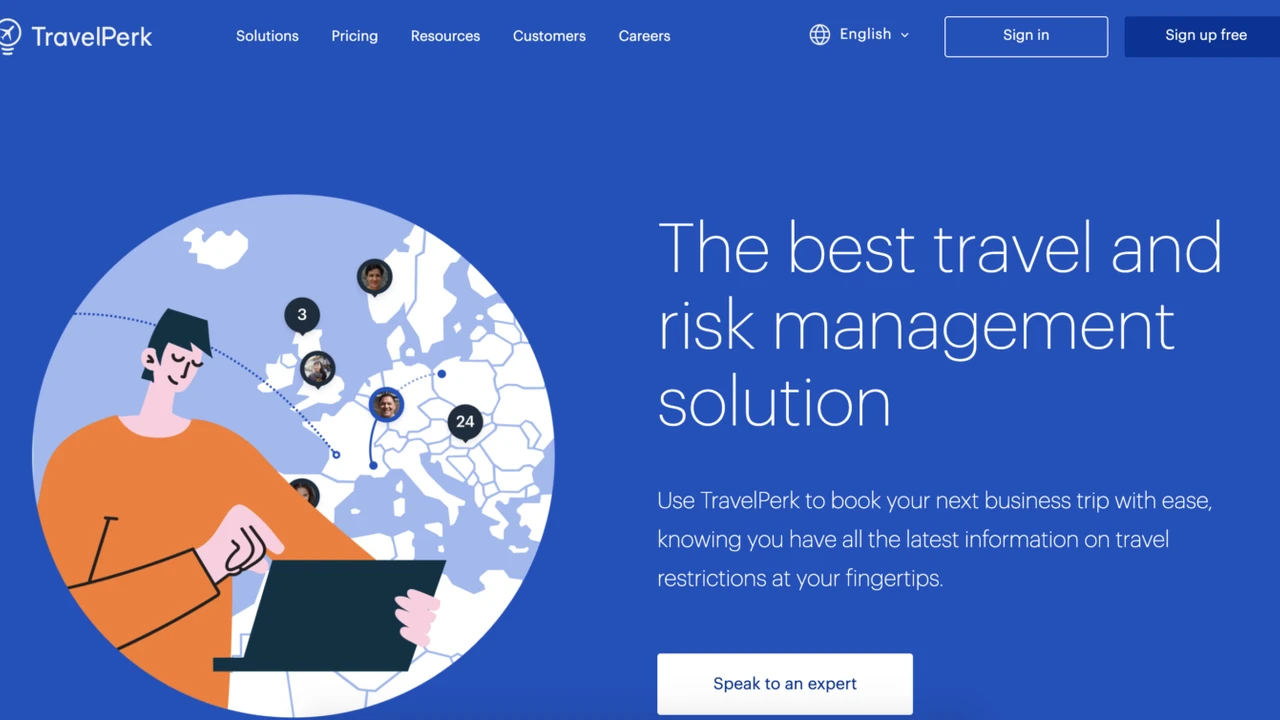
3. TravelPerk All-in-One Business Travel Platform
Deep Dive into TravelPerk's Offerings and Target Audience
TravelPerk positions itself as the all-in-one platform for business travel, emphasizing flexibility, global reach, and a strong focus on customer support. It's particularly popular among scale-ups and mid-market companies that need a robust solution without the complexity of enterprise-level systems. They pride themselves on their extensive inventory and 24/7 support.
Key Features:
- Largest Inventory: Claims to offer the world's largest inventory of flights, hotels, trains, and rental cars, giving travelers more options.
- FlexiPerk: A unique feature allowing users to cancel any trip for any reason and get at least 80% of their money back, offering unparalleled flexibility.
- Automated Policy Enforcement: Set custom travel policies that are automatically applied during the booking process.
- Integrated Expense Management: Connects with popular expense tools like Expensify and Rydoo.
- 24/7 Customer Support: Human support available around the clock, often cited as a major benefit.
- VAT Recovery: Helps businesses recover VAT on international travel expenses, saving money.
- Duty of Care: Real-time traveler tracking and emergency support.
TravelPerk Pricing Models and Value Proposition
TravelPerk's pricing is tiered, offering different levels of features and support. They have a free basic plan for very small businesses, but most companies will opt for their premium plans. Pricing can range from $15 to $30+ per trip or per user per month, depending on the plan and volume. The FlexiPerk feature is an add-on that comes with an additional cost but can provide significant peace of mind and savings in uncertain times. Their value proposition is strong for companies that prioritize flexibility and comprehensive inventory.
Use Case Example: A growing tech company with a global team that frequently travels and needs a platform that offers extensive booking options, strong support, and flexibility for last-minute changes.
4. Egencia Business Travel Management Solutions
Understanding Egencia's Strengths and Corporate Focus
Egencia, an Expedia Group company, leverages its vast travel industry experience to provide a robust business travel management platform. It's known for its strong global presence, comprehensive inventory, and focus on delivering a seamless experience for both travelers and travel managers. Egencia is often chosen by established corporations and those with complex global travel programs.
Key Features:
- Global Reach and Inventory: Access to Expedia's extensive network of flights, hotels, and ground transportation worldwide.
- Personalized Booking Experience: Tailored search results based on company policy, traveler preferences, and past bookings.
- Automated Policy Enforcement: Customizable policies are applied at the point of sale, guiding travelers to compliant options.
- Integrated Expense Management: Connects with various expense solutions to streamline reporting.
- Traveler Support: 24/7 support from travel consultants.
- Data and Analytics: Comprehensive reporting tools to track spending, identify savings opportunities, and monitor compliance.
- Duty of Care: Tools for traveler tracking, risk alerts, and emergency assistance.
Egencia's Competitive Edge and Pricing Considerations
Egencia's main competitive advantage comes from its backing by Expedia Group, which provides unparalleled access to inventory and industry expertise. It offers a very polished and reliable platform, suitable for companies that need a stable and globally capable solution. Pricing for Egencia is typically customized based on the company's size, travel volume, and specific needs. It's generally a subscription model, often with a per-transaction fee or a percentage of travel spend. Expect pricing to be competitive with other enterprise-level solutions, likely in the range of $10 to $25+ per traveler per month, or a service fee per booking.
Use Case Example: A large, established corporation with a significant global travel footprint that requires a reliable, comprehensive platform with strong support and extensive inventory.
5. Rydoo Simplified Expense and Travel Management
Exploring Rydoo's Approach to Expense and Travel Automation
Rydoo focuses on simplifying expense and travel management, making it incredibly user-friendly and efficient. While it started primarily as an expense management tool, it has evolved to include robust travel booking capabilities. It's an excellent choice for companies that want a straightforward, intuitive solution, especially those looking to streamline their expense process alongside travel.
Key Features:
- Intuitive Mobile App: Highly rated mobile app for capturing receipts, submitting expenses, and managing travel on the go.
- Automated Expense Processing: Smart scanning and AI-powered categorization of expenses, reducing manual entry.
- Integrated Travel Booking: Allows employees to book flights and hotels directly within the platform, with policy rules applied.
- Customizable Policy Rules: Set up detailed expense and travel policies that are automatically enforced.
- Real-time Reporting: Get instant visibility into spending and compliance.
- Integration with ERP Systems: Connects with popular accounting and ERP software for seamless data flow.
- Multi-currency and Multi-country Support: Handles international expenses and tax regulations.
Rydoo's Pricing and Suitability for Different Business Sizes
Rydoo's strength lies in its simplicity and user-friendliness, particularly for expense management. It's a great option for small to medium-sized businesses, or larger companies looking for a less complex solution than some of the enterprise giants. Their pricing is typically subscription-based, often per user per month, with different tiers based on features. You can expect pricing to be in the range of $7 to $15 per user per month, making it a more budget-friendly option for many businesses. They often offer a free trial to test out the features.
Use Case Example: A mid-sized company or a startup that needs a highly intuitive and efficient solution for both expense reporting and travel booking, with a strong emphasis on mobile accessibility.
Choosing the Right Travel Policy Automation Software for Your Business
Key Considerations for Your Selection Process
So, how do you pick the best one for your business? It really boils down to your specific needs and priorities. Here are some key factors to consider:
- Company Size and Complexity: Are you a small startup with simple needs, or a large multinational with complex global policies?
- Budget: What's your budget for software and ongoing fees? Remember to factor in potential savings from automation.
- Integration Needs: Does the software need to integrate with your existing ERP, accounting, or HR systems?
- User Experience: How important is an intuitive and easy-to-use interface for your employees? High adoption rates depend on this.
- Global Capabilities: If you have international travelers, do you need multi-currency support, VAT recovery, and local compliance features?
- Customer Support: What level of support do you need for both administrators and travelers?
- Specific Features: Do you need advanced analytics, duty of care features, or unique offerings like flexible cancellation policies?
- Implementation Time: How quickly do you need to get up and running? Some systems are quicker to deploy than others.
Future Trends in Travel Policy Automation and Management
The world of business travel is always evolving, and so is the technology that supports it. We're seeing more emphasis on sustainability, with tools helping companies track and reduce their carbon footprint. AI and machine learning will continue to play a bigger role in personalizing travel experiences and optimizing policy enforcement. The integration between travel and expense will become even more seamless, and duty of care features will become increasingly sophisticated. Whatever you choose today, make sure it's a platform that can grow and adapt with your business.
Ultimately, investing in travel policy automation software isn't just about cutting costs; it's about creating a more efficient, compliant, and enjoyable travel experience for everyone in your organization. Take your time, do your research, and pick the solution that truly aligns with your company's vision and operational needs. Happy travels!
:max_bytes(150000):strip_icc()/277019-baked-pork-chops-with-cream-of-mushroom-soup-DDMFS-beauty-4x3-BG-7505-5762b731cf30447d9cbbbbbf387beafa.jpg)